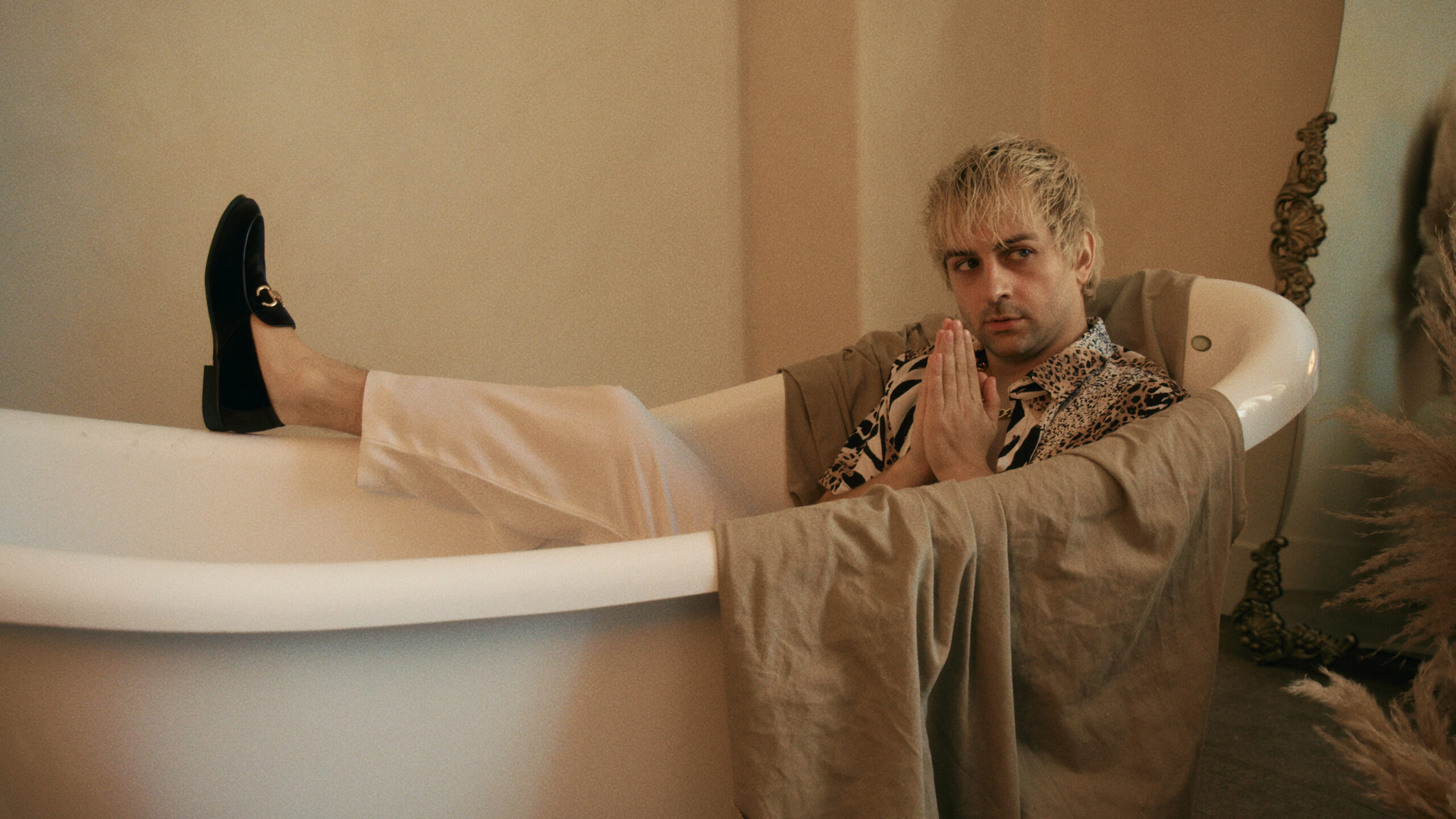
He’s been doing standup comedy for over 15 years, but Joe Kwaczala has also found time to create all kinds of sketch comedy, reaching millions of viewers on TikTok and Instagram. We caught up with Joe as he was getting ready to head east to the Phoenixville Film Festival, where his new film, American Comic will screen Thursday night.
First, how about your synopsis of the movie.
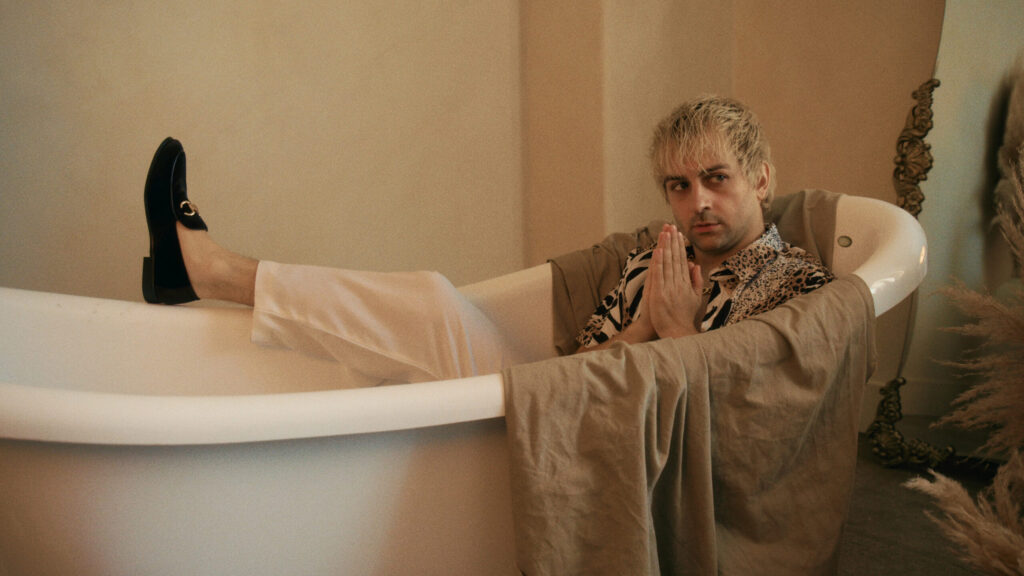
American Comic is a verite-style mockumentary that follows two very different up-and-coming comics. One is a grungy “free speech warrior” podcaster from the midwest and the other is a bleach blonde industry climber kiss-ass from LA. I play both.
When did you first land on the concept for the film?
In early 2022, I was on a walk with friend and fellow stand-up comedian Sam Wiles (who’s also in the film) and he kind of bluntly said “You and Daniel (Daniel J. Clark, the movie’s director) should just make a fake documentary about stand-up.” And I don’t know if he meant for me to take it seriously, but I did!
What do you think will surprise people the most when they see this film?
People will expect certain things with a mockumentary, and I think our movie will deliver in that regard, but I think we also do some interesting things with the structure that will catch people off-guard.
In another article, you mentioned how much it bothers you when other movies get stand-up “wrong.” What did you mean, and why is that so important to you?
As someone who’s been doing stand-up for more than 15 years, I know what it feels like to be at a stand-up show, and I’ve very rarely seen that appropriately portrayed on screen. I think it’s because it’s just hard to recreate that specific energy, especially when you have cameras, lights, extras, etc. And I just felt like if our movie is going to be about stand-up comedy, then we have to get it right.
The standup portions of your film are real standup performances in front of real audiences. While you were playing these characters on stage, was there anything you learned about the audience that wasn’t obvious when you perform as yourself?
I guess I learned different things depending on how the sets went. When I did well, I could feel how forgiving and open an audience can be. And then when I was bombing, it reminded me that (thankfully) some audiences have taste.
You play both main characters in the film. Did you want to explore these two different personalities, or was that driven more by the necessity of budget/scale to play the roles yourself?
It’s funny– it never occurred to me that I wouldn’t play both roles. This film is an extension of my existing working relationship with the director Daniel Clark, and so many of our projects over the years have been just him filming me. So when the movie was taking shape and I settled on these two protagonists, it just made sense that I would do both. I also think it’s a nice hook when I pitch the movie. I mentioned it in my first answer for a reason! I feel like it can shift someone from being indifferent about the film to being intrigued.
Any other performances in the movie you’d like to call out?
The aforementioned Sam Wiles portrays Dan, a much-needed sympathetic character in the story. I play such jerks that it’s really helpful to have someone to root for, and Sam has a natural affable quality about him. Hayley McFarland is Olivia, the girlfriend of one of my characters, and she brings such depth and dimension to the role. And finally, he’s only in a handful of scenes, but one of the funniest people I know, John Eisenrich, nearly steals the whole movie with his performance as a crazed fan.
There was a time when the term “multi-hyphenate” applied to someone who maybe produced-directed-edited, etc. I feel like you embody sort of this newer version, where you’re a performer/comic, but also creating short videos, episodic content, and feature-length projects. That’s all a lot to juggle, how do you manage your time/decide what to tackle next?
Well, first off, this is a very flattering question. I guess I just like doing all this stuff, so it never feels like work. And when you want to do something, you’ll always find time for it. I’m also very lucky to have a partner like Daniel, who’s very game to explore new things while making sure that it always meets a certain threshold of quality.
Do you find that these endeavors attract separate audiences, or do you see fans of your Instagram/social media videos coming to festivals to see your film?
I have yet to fully grasp the overlap of these audiences, but I know that some folks who follow my stuff online have definitely come to screenings and that is very cool!
What are some of the pros and cons of being on the “festival circuit” for you?
Pros: seeing new places, meeting other filmmakers, watching your work in front of a crowd
Cons: expensive travel, weird hours, having to leave behind my girlfriend and our cats
Tell us a bit about your director, Daniel J. Clark. How did he get involved?
I met Daniel in a film production class in college. At first, I resented him because he was a more talented director than me, but then as I got to know him, I realized we had a shared sense of humor and got along great. And soon, we were collaborating. Together we’ve made late night talk shows, web series, pilots, music videos, sketches– truly hundreds of things. We’ve always dreamed of making a movie, but it wasn’t until this idea hit us that we realized we could pull it off.
With the documentary style of the movie, did you storyboard, or shoot in a more improvisational way?
This is a better question for Daniel to answer, but I know he’s pretty meticulous. I think going in, he knows generally what he wants but is open to shifting things once the actors are in the space and he’s exploring the action through his lens. He makes real documentaries, so he has experience with constructing shots on the fly. And just in general, he knows the kind of shots that a real documentary would get, so he’s striving for that and knows when we’ve got it.
How long did the film take to shoot?
I actually have this all written down in a spreadsheet, so let me look this up. It looks like we shot for 5 jam-packed days in the midwest at the end of June last year. That was really intense because we were on a tight schedule. Then we finished out the rest of the scenes with that character with 4 or 5 much more relaxed days and half-days of shooting in Los Angeles throughout July. Then we took a bit of a break so I could physically transform into the other character. And we filmed the rest of it for maybe 10 or so days in Los Angeles at the end of September into early October. So in total, about 20 days– 10 days for each character, about two months apart.
Tell us a little about how you funded the movie.
This movie was conceived in such a way that we could more or less fund it ourselves.
Any particular challenges shooting that you didn’t anticipate?
I kind of foolishly wrote a scene where “A famous person walks in” and then, understandably, had trouble casting that. I was worried that we’d have to scrap that scene because I couldn’t convince anyone to do it, but in my desperation, I shot a hail-mary message to potentially the most famous person I know, Patton Oswalt. And he said yes! So I guess what I learned from doing this project is that Patton is cooler, nicer, and funnier than I thought. And I was already holding him in VERY high esteem!
American Comic will screen at the Phoenixville Film Festival Phoenixville PA, Thursday 9/18, then the Port Townsend Film Festival in Port Townsend, WA 9/19 and 9/20. You can watch the trailer here.

Leave a Reply