Imagine writing and directing your first feature film at 12 years old. Now imagine a documentary film crew following you around as you try to do it, capturing the excruciating details as the project drags on for years. That was the pressure and odd situation Emily Hagins found herself in at the beginning of her filmmaking journey.
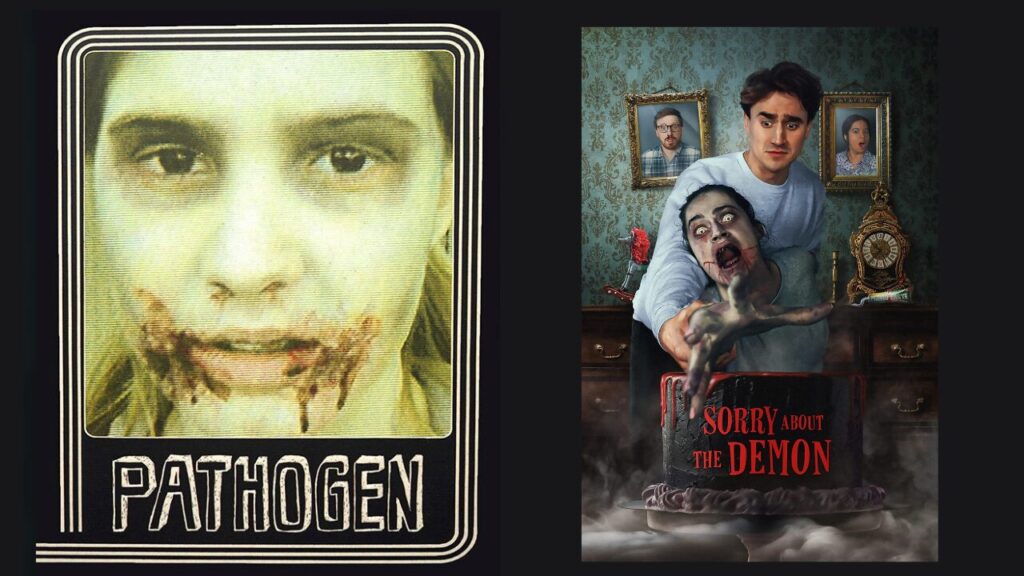
The making of Hagins’ film, Pathogen, was the subject of the documentary Zombie Girl: The Movie. That documentary is how the wider film community first learned about Hagins. Zombie Girl won a Slamdance Film Festival award and was screened at other festivals around the country.
I recently watched Zombie Girl on Slamdance’s streaming platform, and it made me wonder what became of Emily and her ambitious career plans. As it turns out, she has gone on to have a career largely in her favorite genre, horror, and often on her own terms, having written many of the projects she has directed.
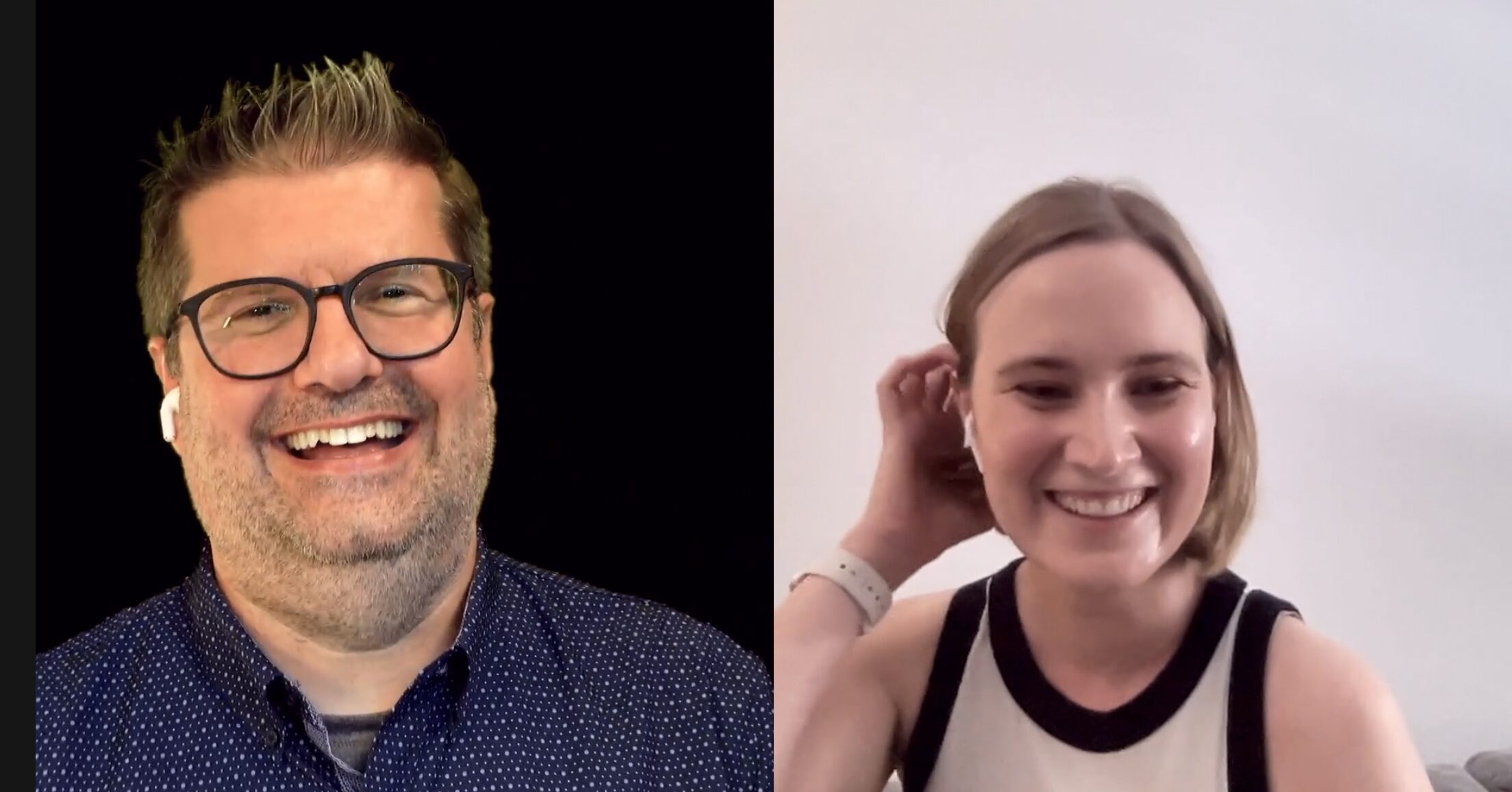
Emily Hagins joins me on the podcast to talk about her unusual beginning and her most recent film, Sorry About the Demon, for Shudder.
Ryan: Emily, thank you so much for joining me.
Emily: Thanks for having me.
Ryan: So let’s go back to those early days. I’m curious how the documentary about your project came about.
Emily: I’d been having some start-and-stop attempts at my film Pathogen, and you kind of get some kids and everyone is like, “Oh, I thought we were just having fun and didn’t realize this is work.” No fault to the kids, of course, that’s just being a kid. So you’re trying to find the right combination of people that want to be part of it, that are really interested in making movies, where you’re not just dragging them along for something that isn’t so fun.
I put out a casting call for actresses, and it said in the casting call, for transparency, “This film is being made by a child, a 12-year-old, and we’re looking for other kids.” There was a public access show in Austin where these filmmakers were showing up to local productions and doing short segments on them. They hadn’t made a feature documentary, but they thought, “This sounds weird and interesting.”
They had been scanning casting calls for what was shooting in Austin and saw that, and we connected. They said, “We think this could be a documentary.” I always like to clarify, I didn’t ask anyone to make a documentary. I wasn’t like, “I’d like to star in something.” I was very self-conscious about the process, but they were very fly-on-the-wall, and I understood they were also trying to make a movie.
So I would struggle with something and then ask, “Did you get enough of me struggling? Can you help me with this?” We had a nice rapport. They have to create drama and a narrative and do everything they have to do, but I generally felt like we had a mutually respectful situation going on. Since then, as embarrassing as it is for me, I love that kids can look at that and Pathogen together, and if they’re interested in making movies, see, “This isn’t someone with a lot of privilege or resources, but this is what they made and how they did it, and I can see the process.”
That’s what I did. I had seen these kids that made the Raiders of the Lost Ark adaptation shot-for-shot. I think they called it Raiders: The Adaptation, and it took them 10 years to do it. For me, that was such a pivotal moment in my filmmaking aspirations because I saw what those kids did and felt like I could be inspired by it. Seeing other kids do it, I’m less embarrassed as an adult filmmaker of Pathogen or the documentary because I think it stands as a good educational resource and it shows me my own roots.
We were talking about that before we started recording—that youthful passion for filmmaking, which is something I always try to remind myself of.
Ryan: I’m so happy the documentary was made because it really captures a type of filmmaking. I was making my first feature around that same time and, not to get all “old man shaking my hand at the clouds,” but there was something about that time. Today, it’s almost too easy for your film to look good and sound good. For us in that period, that’s what set it apart as a student film.
I feel like it’s almost a disservice now where all film is held to the same standard because it all looks good, and maybe that’s not necessarily good for developing as a filmmaker. You can make something that could pass for digital cinema certification at home on a phone or a 500-dollar camera. I’m really glad that documentary captures a very unique point in time when we had these digital video tools available, but no one was going to mistake them for professional productions.
Emily: That’s so interesting because there’s something about that era. I feel like, not universally but in some cases, even to kids today, when they see something really digital, it signals something real. I’ve seen these digital cameras come back that look like early-2000s cameras, at concerts and other places. I’ve seen kids use them, and there’s something about that digital, flawed quality that tells people, “This is more real.”
Even some AI videos have a pixelated quality, and it tells people, “No, that’s a real video; it’s a little pixelated or rougher around the edges.” I went to a screening of a movie from the early 2000s, and somebody fainted because it was so violent and so digital that it felt real, like you were there in the room while this horrible thing was happening.
It’s a little rougher around the edges, but somehow it feels more real. That less-slick quality hits people subconsciously, even those who didn’t grow up with it. Gen Z with their little cameras have this different aesthetic that’s raw. Pathogen and Zombie Girl definitely tapped into that from that era.
Ryan: I’m curious, you made this film in the early aughts in Austin. You were quite young, but were you aware of what a special place and time it was in the early aughts in Austin for filmmaking?
Emily: I feel very grateful because I didn’t end up going to film school in college, but I really wanted a film education. I’ve always valued learning and growing, and I still do. There’s always stuff to learn. Austin at that time—there was no better place to be learning as a filmmaker.
There were constantly repertory screenings and people coming in for those screenings, plus new movies and Q&As. You were always getting some kind of fantastic Q&A or social environment. Fantastic Fest was starting up around then, and it was so intimate compared to a lot of other festivals. People would hang out together between movies, which was really different instead of waiting in a bunch of lines and traveling across town.
Austin also had South by Southwest and Austin Film Festival. There were a lot of festivals concentrated in Austin, which is another great thing about growing up there. I was known to take the school bus down to the Alamo Drafthouse. I didn’t know which bus led to my house; I only knew which bus led to the Alamo Drafthouse. I’d take the school bus, with a little permission slip that I was allowed to go there because you had to be a certain age.
It was a wonderful film education. I met so many great people and a lot of great film critics who were concentrated there at the time, many of whom have gone on to make their own movies. I learned so much, and I’m grateful for that pre-education. I paid for a lot of movie tickets, but it was still a huge pivotal part of my film education.
Ryan: Alamo Drafthouse at that time was probably the best place to go to a screening in the country, I think. It was very special.
Emily: I still smell a kind of musty bar smell and think, “Oh, my childhood, I’m going to that old Alamo.” It was just so wonderful.
Ryan: Speaking of that Alamo, you had your film Pathogen premiere there in 2006, is that correct? You had been working on it for several years. It screens, and I’m wondering if you remember how you felt after that. Did you feel like you were off and running—“Look at me, I’ve made this thing, this is where I’m going, this is my career”? Were you filled with dread—“What have I done?” What were your feelings after that screening?
Emily: Nobody has ever asked me that, I don’t think. One reason I don’t rewatch Zombie Girl, among others, is because it makes me cry how they show my mom. I don’t think I was looking at my mom; I’m crying talking about it, but I was just a kid thinking, “This is so much fun.”
We’re still very close. My family didn’t have a lot of money, but I remember—and still feel and tell my parents this all the time—how incredibly grateful I am to have their support, their kindness, and that they believed in me. I don’t think I could have left that screening believing I could keep doing this if they didn’t believe in me.
It wasn’t just believing in me; so many of them worked on it. I love teamwork, any kind of group project where people bring their individual skills and make something better. It was communal; we were all supporting and celebrating each other. I love that the documentary highlights these people and these expressions that I was too frazzled and too young to really note or remember. I have the documentary to remind me, “Oh, here’s how proud my mom was,” and “Here are these wonderful people that came together and celebrated this really low-budget, scrappy movie.”
I think that motivated me into thinking, “This is it.” I knew from the time I picked up a camera, as I’m sure you did, there was nothing else I ever wanted to do. You’re young, so people say, “We’ll see.” I shut down sports pretty fast, and these other things pretty fast. I thought, “This is my thing.”
You get older and people say, “Maybe look at college.” I’m not anti-college, of course. Somebody even told me, “It won’t be until you turn 30 that people will take you seriously.” I wondered, “When is this bar going to end—when will people believe that this is your career?”
But I always knew in my heart I wanted to keep going. I had a lot more challenges after Pathogen that pushed against, “Do I really want to do this?” Panic attacks, losing locations, losing actors—those challenging things that make you want to quit. But I feel like Pathogen is the foundation. Coming off that screening and that movie, I felt like I had a solid foundation: I knew in my heart I could get through it. I got through that, I can get through the next one.
Ryan: And you’ve kept getting through the next one and the next one. In 2022, you had Sorry About the Demon released with Shudder. Take us through your career after Pathogen, after high school. How did you chart a path?
Emily: I made a second film that I’ve kind of buried. Not because it’s some cool secret genius piece of art that I’m hiding; it was more my growing pains. People talk about a sophomore slump—this was my growing-pains movie. I had a little publicity around Pathogen because I didn’t know what I was doing at the time was maybe unique.
With the second movie, I was struggling more with my identity as a filmmaker. We had many challenges: a hurricane came through—not our set—but we lost locations and actors. It was a string of challenges; it was kind of a cursed movie. To me, the real lesson of it was educational. I didn’t feel like putting it out in the world. It’s finished, but I learned a lot of lessons, and thought, “That was my educational-purposes project.”
We sold a bunch of stuff in a garage sale to finance it; again it was kids getting together, trying our best. After that, I made my third movie and recentered myself on my identity: What do I want to make? What feels truthful to me? What feels like me versus what I think people want me to make? That film was My Sucky Teen Romance. It played at South by Southwest and got picked up for distribution. I got rejected from film school the same day that movie premiered at South by, and I thought, “I think this is the stars aligning. This feels like the path I want to take out of high school.”
After My Sucky Teen Romance, I made Grow Up, Tony Phillips, a coming-of-age Halloween dramedy about my feelings coming out of high school and wanting a career in the arts while being told to “grow up” and grow out of that. By happenstance, my good friend since Pathogen, Tony Vespe, had tried to trick-or-treat at 18 and had a rude awakening that maybe that’s weird. We combined his experiences and my feelings at the time and made that movie.
It recently had a resurgence because it was re-released by Terror Vision and Grave Face, with a new Blu-ray and essays in a booklet. It was nice to see it revisited. Pathogen got re-released too. It’s nice to see movies have a longer life; they’re out there for people to enjoy, hopefully forever, and it’s nice when things get revisited.
After that, I moved to LA and made a Netflix movie called Coin Heist. That was a for-hire job; I was still pretty young and my mission was “Don’t get fired from Netflix.” It was a challenging movie, but I met talented people through it. They gave me another project where I could be more free—not Netflix, but the company that had the Coin Heist property. They let me do a little six-part digital series, a kind of Rashomon-pronged story. That was fun and challenging, and it played at SXSW in the episodic program.
I did a Snapchat horror short around that time, which was challenging to make for Snapchat but fun. We had a great time shooting it. I also did a segment of the horror anthology Scare Package, which led into Sorry About the Demon because it was the same lead actor and similar tone.
I already had the Sorry About the Demon script; you have these projects for years. It checked a lot of boxes during COVID. Shudder could already see the sensibilities with Jon Michael as the lead, and it had many elements similar to the COVID lifestyle: stuck in your house with too many hobbies, feeling like you can’t leave. I think it tapped into things people were going through, and the project started moving quickly. We were lucky to shoot a movie during COVID.
We shot in Canada even though we were all from Texas. We went to a hotel that was shut down, built sets in the atrium, and lived in a COVID bubble. Luckily no one got COVID. When I look at that movie, I feel “COVID times,” but we had a great time shooting it and I’m grateful people stayed healthy. There are probably other little things between those projects I’m not thinking of, but those are the highlights from then to now.
Ryan: One of the reasons I wanted to interview you—and it made me wonder how your career was going—was because in Zombie Girl there’s a line from your father when he says that in 20 years there’s a 50/50 chance you’ll be working in film. Fast forward, here we are.
Emily: Oh my God, I’m going to call him today and bring this up! That’s so funny. I remember that line. My dad is a wonderful musician and very talented. Both of my parents are extremely creative, and I’m in awe of them.
I think he always wanted to protect me, because both of them had experienced rejection in the arts and wanted to make sure I felt protected from it. I think he was thinking about that and wanting to protect me. It’s one of those things where I’m like, “Hi, I’ll show you today this afternoon; that’s kind of your 20 years.” But thank you for reminding me of that.
Ryan: I’m curious, lastly: it’s a very different business, but when you were 12 you weren’t really thinking of it as a business. I presume you weren’t reading Variety and being concerned about studio mergers. What would you advise someone who is 12 today who says, “I want to make a film”?
Emily: I asked that same question to the kids who made the Raiders of the Lost Ark adaptation. I went to the screening when I was 10, and I never asked Q&A questions, but I asked, “What advice would you give to a 10-year-old filmmaker that wants to do what you did?” They said to persevere and not let anybody tell you what you can’t do.
I did face that a little on Pathogen when I recorded over some important footage and was told by some people, “Well, it was a good run, you did a good job.” I thought, “What do you mean? I have to finish the movie I started with you.” It hadn’t occurred to me that I wouldn’t finish it until that moment, and that advice became my rock, and still is. People are going to tell you no all the time or tell you how hard it is, and it is hard, but a lot of things are hard.
If you feel passionate about it and you have things to say, I think a 10- or 12-year-old’s vision of what they’re going through and how they see the world is just as valuable as anyone else’s. If you’re moved by movies, I would love that, because I want to believe that young people still like movies. I didn’t grow up with reels or TikTok, and I’d love to see—and I do believe—that young people still like movies and want to make them. I’d love to see that and support that.
We all have creative and interesting views on the world. I love movies; I watch them as much as I love making them. I just want to see more great films.
Ryan: Very good advice and a very good role model for those who want to start at an early age. You can do it, you can persevere, and you can make projects that are important to you and need to be in the world. Emily, thank you so much for joining me today.
Emily: Thanks for having me. You asked me a bunch of questions that I don’t think anyone’s ever asked me. I’m going to have to emotionally reflect on this.
Ryan: Until next time, everyone, stay scrappy!